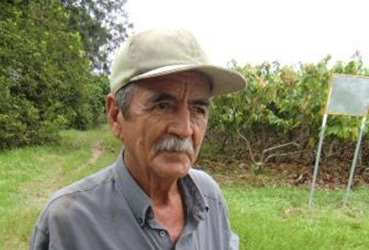
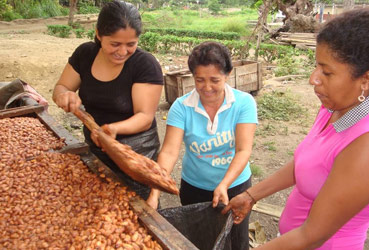
Before it was called organic, most stuff that grew from the earth was just called “food.” You planted a seed, it grew, you ate from it. That’s it. Industrialization brought upon the “need” for pesticides and other chemicals and processes that were just plain bad for us and not good for the earth, either. But in Ecuador, where we purchase our cocoa from local farmers, the cocoa is intrinsically organic because cocoa grows in the wild without the need of fertilizers. Not only that, farmers in Ecuador simply can’t afford fertilizers or chemical controls. What you see is what you eat. They go beyond not using fertilizers, they use
biodynamic methods of caring for their cacao, using ancient techniques.
In our opinion, organic labeling actually hurts small farmers in Ecuador and other parts of the world. USDA organic or EU organic charge large fees to farmers in order to issue the organic certificate, and each year farmers must pay to maintain their certification. For crops where farmers enjoy large margins, the fee is negligible, but for poor cocoa farmers the fee would put them out of business. For cocoa farmers, neighboring farms that have the organic label get paid above-market prices for their crops while farmers who don't have the certification are discounted. All the while, their crops are growing as “organically” as their neighbors, and with smaller yields because trees must be cared for by hand and individually.
We believe in pure chocolate, close to the source, as nature intended it. So, though we don’t have an “organic” label, we have full confidence that our cocoa is being sustainably raised in the healthiest way possible.
Eventually, we would like to push legislation for a free certification for farmers, under the name of Naturale (which means “organic” in French) where small farmers with plots less than 100 acres could apply and be evaluated for this certification; we could go beyond and get a Biodynamic certification as well. This gives consumers a standard they can expect from the product in their hands, and allows small farmers to reap the benefits of that recognition without an unsustainable fee.